We’ve all been there: the sting of seeing a light blazing in an empty room, the mental calculation of wasted money. But what about the air conditioner humming away unnoticed, or the heating system working overtime? Why do we see one, but not the other? Is it simply a matter of « out of sight, out of mind »? Or are there deeper psychological phenomena at play, like a lack of understanding about how HVAC systems work, or a disconnect between our actions and their environmental impact?
Dr. Shahzeen Attari (1) at Indiana University has found that people are more likely to conserve water than energy because water waste is more visible. This suggests that our perception of waste is heavily influenced by what we can see. The American Council for an Energy-Efficient Economy (2) has also conducted extensive research on energy waste in buildings, highlighting the significant impact of unseen factors like HVAC systems. Their findings, combined with insights from organizations like the Air Conditioning Contractors of America (3) and the National Comfort Institute (4), paint a picture of a society acutely aware of visible waste, yet largely oblivious to the invisible energy guzzlers that surround us.
The Mind's Blind Spot: How Cognitive Shortcuts Hide HVAC Waste
Our brains are wired to be efficient, and sometimes, that efficiency comes at the cost of awareness. We create mental shortcuts to process the overwhelming amount of information we encounter daily. This phenomenon, known as cognitive miserliness, suggests that we are naturally inclined to conserve our mental energy. It’s not that we are intentionally ignoring the invisible waste; rather, our brains have prioritized other stimuli as more important. The immediate visual cue of a light left on triggers a simple, direct calculation of waste, while the abstract, continuous consumption of an HVAC system requires a more complex mental effort to comprehend and act upon. We know the waste exists, but our cognitive resources are already allocated to the more pressing, visible concerns of our daily lives.
Our tendency to overlook invisible energy waste might be explained by phenomena like inattentional blindness and change blindness. Inattentional blindness, as explored by leading researcher Elizabeth Loftus (5), occurs when we fail to notice something obvious because our attention is focused elsewhere. In the context of energy waste, we might be so focused on the immediate comfort provided by our HVAC systems that we don’t notice the gradual increase in our energy bills. Similarly, change blindness suggests that we’re less likely to notice changes in our environment if they happen gradually or aren’t the focus of our attention. The slow creep of energy waste from an inefficient HVAC system might go unnoticed until it becomes a significant financial burden.
Overcoming the "Invisible Waste" Problem
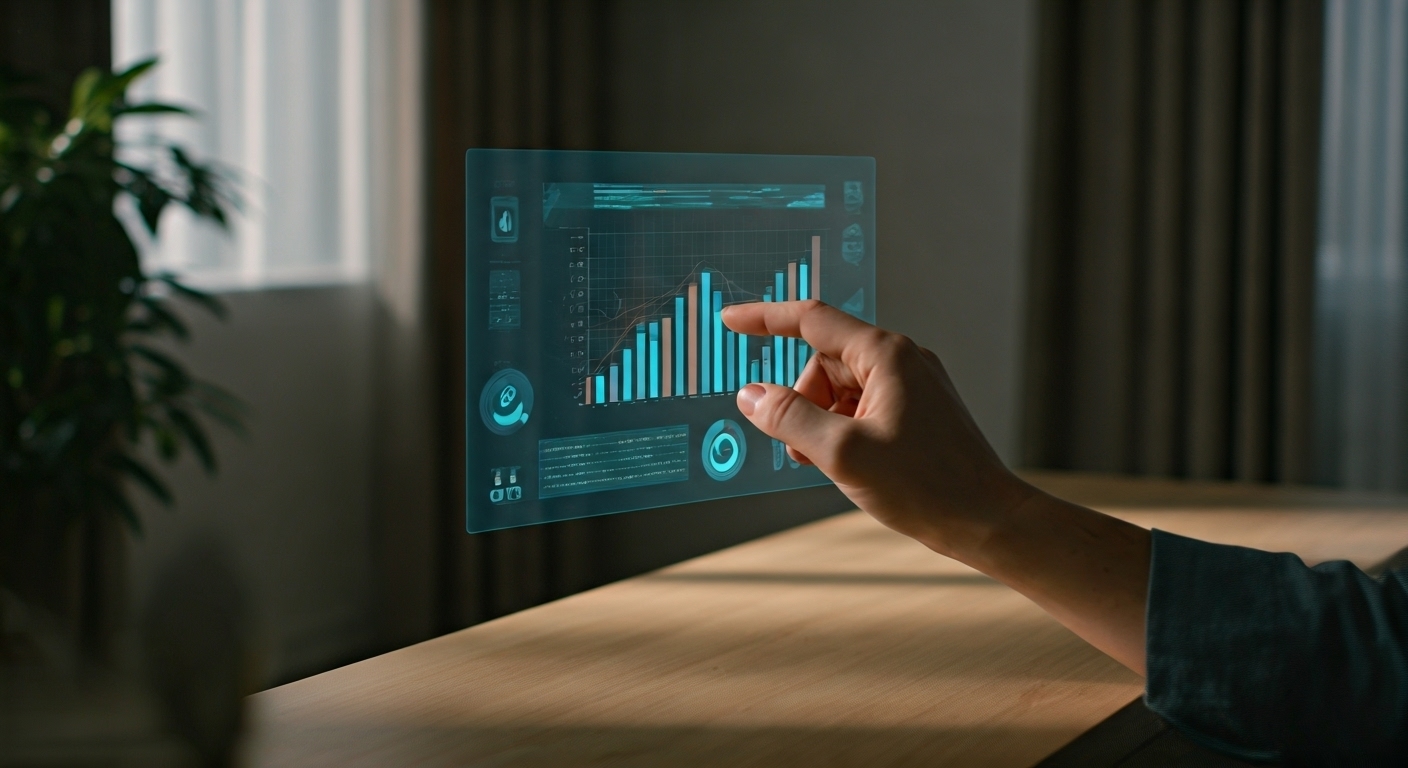
Addressing this cognitive bias requires moving beyond simple awareness and into actionable, visible solutions. Behavioral nudges can make the invisible visible. For instance, smart building technologies can provide real-time, easily digestible data on energy consumption, translating kilowatt-hours into relatable metrics like dollars spent or environmental impact. Education is also key, helping people understand the scale of HVAC energy use compared to smaller, more visible sources. At an individual level, we can practice mindfulness about our energy consumption. By consciously connecting the act of adjusting a thermostat or turning on an appliance to its real-world consequences, we can bridge the gap between our actions and their invisible impact. This personal effort, combined with technological tools that provide immediate, tangible feedback, can help us overcome our selective blindness and focus on the waste that truly matters.
The Unseen Energy Numbers in US and EU
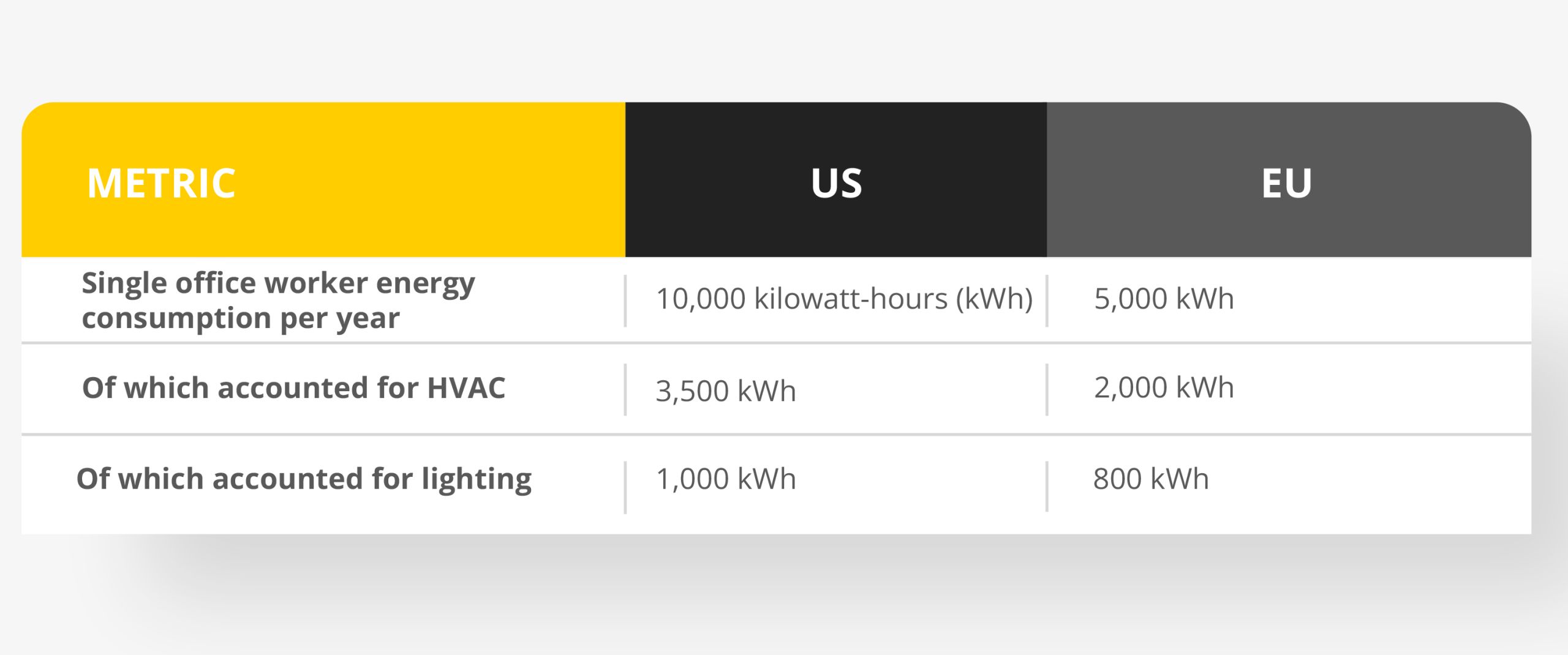
On average, a single office worker in the U.S. accounts for about 10,000 kilowatt-hours (kWh) of energy consumption per year (6), while in the European Union, it’s around 5,000 kWh (7). In both regions, HVAC systems are a major energy consumer. In the U.S., HVAC can use up to 3,500 kWh, over three times the 1,000 kWh used for lighting. In the EU, HVAC consumes about 2,000 kWh, roughly 2.5 times the 800 kWh for lighting. This highlights that, regardless of location, HVAC is a primary driver of office energy use, and it is mostly overlooked due to its “invisibility”.
Collective Action in Commercial Buildings
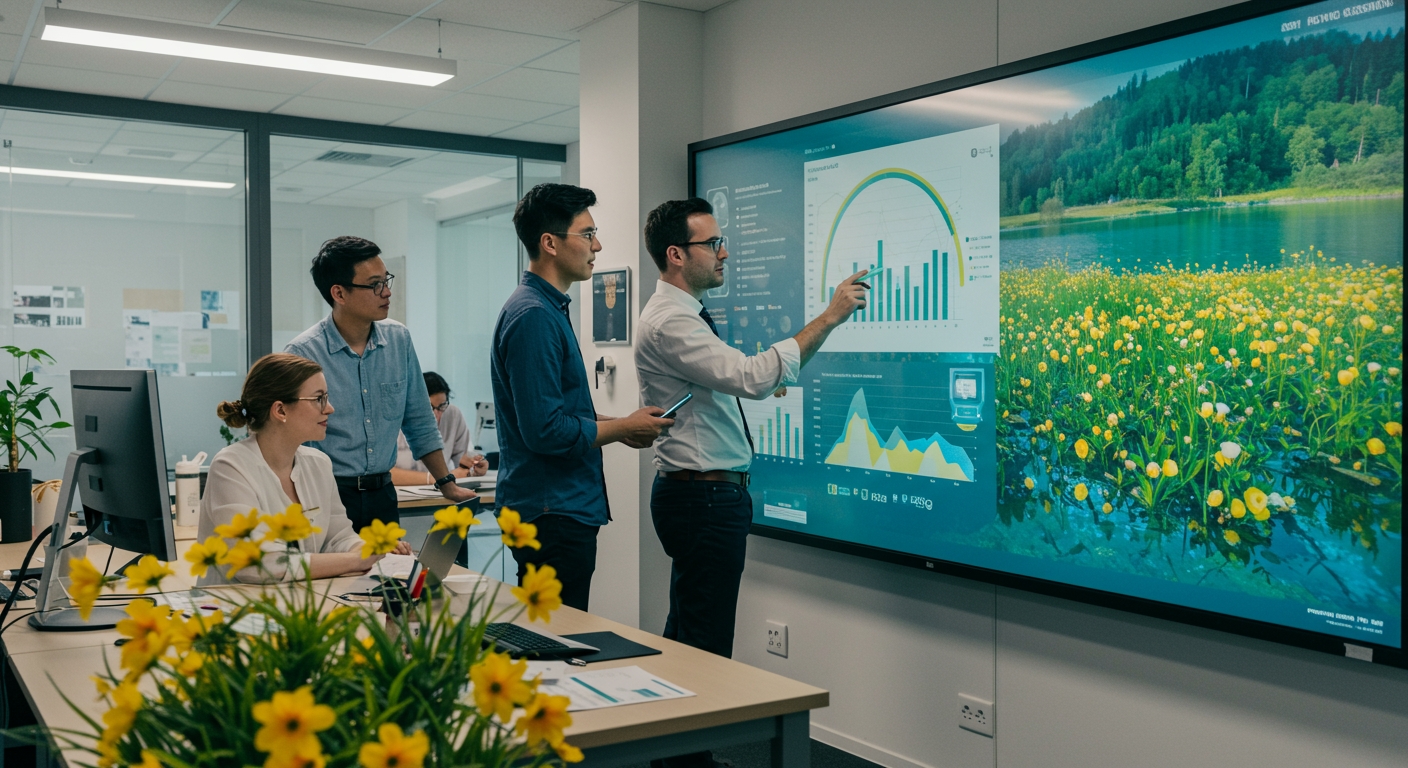
While individual mindfulness is crucial for our homes, it’s a different story in commercial buildings where energy consumption is a collective responsibility. To address the « invisible waste » on a larger scale, the paradigm must shift from personal effort to communal accountability. Behavioral design strategies can be deployed to encourage occupants to act as a unified force. For example, using prominent, real-time energy dashboards in lobbies can make invisible waste visible to everyone. This transparency creates social pressure and fosters a sense of shared ownership, empowering tenants and employees to question inefficient practices. By making energy performance a public metric, building occupants are given the leverage to demand smarter, more efficient operations from building managers and owners, effectively turning a psychological blind spot into a powerful catalyst for change.
How Governments should Help, from Today
Government policies and regulations can play a crucial role in overcoming these psychological barriers. Building codes that mandate energy-efficient HVAC systems (i.e. driven by people counting infrastructure), tax incentives for retrofitting older buildings, and public awareness campaigns that highlight the true cost of invisible energy waste can all contribute to a shift in perception and behavior. By creating a regulatory environment that prioritizes energy efficiency, we can make the ‘invisible’ waste a more tangible concern for both building owners and occupants.
Ultimately, a true resolution will only be achieved when public awareness grows, and a cultural transformation sparks social pressure for change.
The Author: Dr. Max Ruffo is a visionary technology leader with over two decades of experience at the forefront of industrial innovation, having pioneered the introduction of 3D printing, civil drones, autonomous mobile robots and LiDAR sensors. Today, Max is dedicated to a long-term mission of building a better world by championing green buildings and net-zero communities.
References and Links
If the topic is of interest, I advise diving into some interesting research with these key leaders:
Academic Research on Waste and Behavior
- (1) Dr. Shahzeen Attari’s research: Her work at Indiana University focuses on people’s judgments and decisions about climate change and resource use. You can explore her publications and profile at:
https://oneill.indiana.edu/faculty-research/directory/profiles/faculty/full-time/attari-shahzeen.html.
Psychological Concepts (Inattentional and Change Blindness)
- (5) Elizabeth Loftus’s work: Her research on memory, inattentional blindness, and change blindness is foundational to this topic.
- « Planting misinformation in the human mind: A 30-year investigation of the malleability of memory » (2005): https://pubmed.ncbi.nlm.nih.gov/16027179/
- « Change blindness and eyewitness testimony » (2010):
https://psycnet.apa.org/record/2010-18400-006
Industry and Policy Resources
- (2) American Council for an Energy-Efficient Economy (ACEEE): This non-profit organization provides extensive technical and policy analyses on energy efficiency in buildings. https://www.aceee.org/
- (3) Air Conditioning Contractors of America (ACCA): This association provides resources and standards for the HVAC industry. https://www.acca.org/
- (4) National Comfort Institute (NCI): NCI offers training and resources to HVAC professionals, with a focus on high-performance and energy-efficient systems. https://www.nationalcomfortinstitute.com/
- (6) Commercial Buildings Energy Consumption Survey (CBECS) by the U.S. Energy Information Administration (EIA).
https://www.eia.gov/consumption/commercial/data/2018/ - (7) Eurostat article « Final energy consumption in services – detailed statistics » https://ec.europa.eu/eurostat/statistics-explained/index.php?title=Final_energy_consumption_in_services_-_detailed_statistics