For decades, the trade show industry has operated on a static metric: the square meter. Exhibitors buy real estate, pay a flat fee, and hope for the best. But in a world where digital marketing is hyper-optimized for “Pay-per-Click” (PPC), the physical world is finally catching up.
At Terabee, we believe we are entering the era of Pay-per-Performance for physical events. By using high-accuracy, anonymous people-counting technology, we are providing the “digital footprints” necessary to turn intuition into hard ROI.
The Epiphany: From Gut Feeling to 4.2% Capture Rate
The vision isn’t just theoretical. During a recent 3-day experiment at a major trade show in Milan, we installed Terabee FLOW sensors at our own booth. The data didn’t just confirm our feelings; it challenged them.
- The “Golden Hours” Myth: Our team felt Friday was “dead.” The data showed a significant traffic peak between 2:00 PM and 3:30 PM, perfectly correlated with the end of main-stage keynote sessions.
- The Capture Rate KPI: We didn’t just count visitors; we benchmarked. By comparing hall traffic to booth entries, we discovered a 4.2% Capture Rate.
- Hard Conversion: Out of 450 verified entries, we logged 90 qualified leads: a 20% Booth Conversion Rate.
These aren’t just numbers; they are the foundation of a new business model.
A Triple-Win: The Stakeholder Perspective
To make this tangible, we must look at how this data transforms the three pillars of the industry: the Venue, the Organizer, and the Exhibitor. As industry innovators like Julius Solaris and Michelle Bruno have often advocated, the shift from “Real Estate” to “Audience Value” is the only way to future-proof physical events.
1. The Exhibitor: Moving to “Pay-per-Visit”
Exhibitors are tired of “blind” investments. With a new people counting rental model available, exhibitors can now:
- Justify Spend: Move from “we think it was a good show” to “each qualified lead cost us €X based on verified booth traffic.”
- Optimize Staffing: Use real-time occupancy data to ensure the booth isn’t understaffed during peak flows.
- Justify Spend: Move from “we think it was a good show” to “each qualified lead cost us €X based on verified booth traffic.”
2. The Organizer: Selling Audience Access, Not Just Carpet
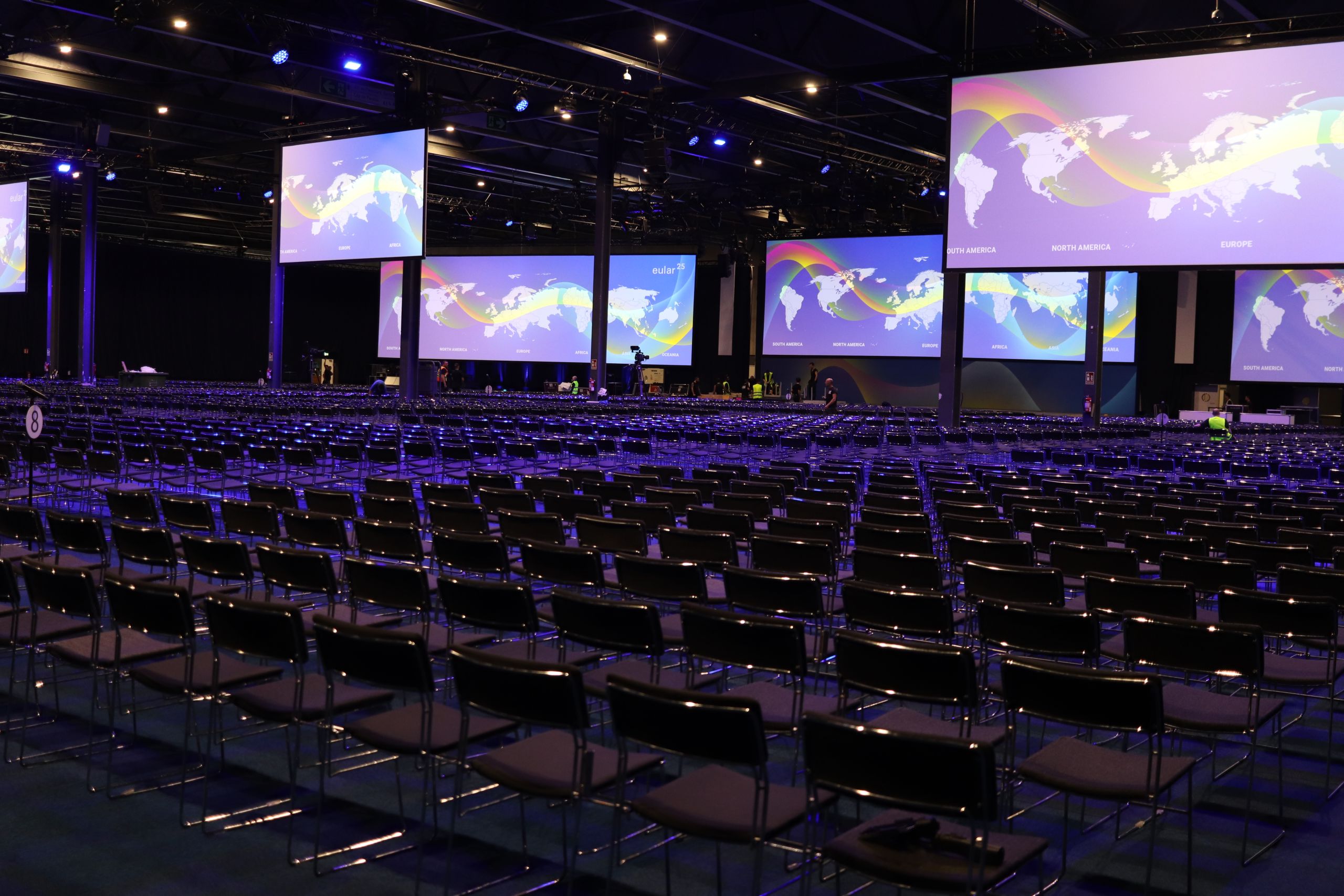
For organizers like EULAR (European Alliance of Associations for Rheumatology), people counting is about engagement and safety. This realizes the “Smart Event” vision pioneered by experts like Corbin Ball, where technology serves as the bridge between physical presence and digital intelligence.
“Renting Terabee sensors enabled EULAR to collect tangible data on visitor’s engagement. The data enabled us to understand the triggers for a more profound and strong visitor engagement while respecting privacy.”
— Emmanuel Roche, EULAR
3. The Venue: The “Smart” Infrastructure
Venues are shifting from passive buildings to active data providers. By installing permanent or semi-permanent sensors, show hosts can align with UFI standards (championed by leaders like Kai Hattendorf) to offer Data-as-a-Service (DaaS) layers to their tenants.
Successful Deployments: Proving the Model in 2025
Beyond individual booth monitoring, the implementation of this technology at the event-organizer level has opened a new world of strategic intelligence through real-world deployments.
EULAR at Fira Barcelona: Optimizing the Attendee Experience
Our work with EULAR at their Barcelona congress proved the scalability of this concept. By deploying 99 FLOW sensors for conference halls and 51 OCCUPANCY sensors for poster areas, we helped organizers move beyond “estimated attendance” to “verified engagement.” This allowed for real-time monitoring of session interest, enabling organizers to identify where room allocations were inadequate and adjust for future events based on actual demand.
SFR at Porte de Versailles in Paris: Rethinking Space and Content
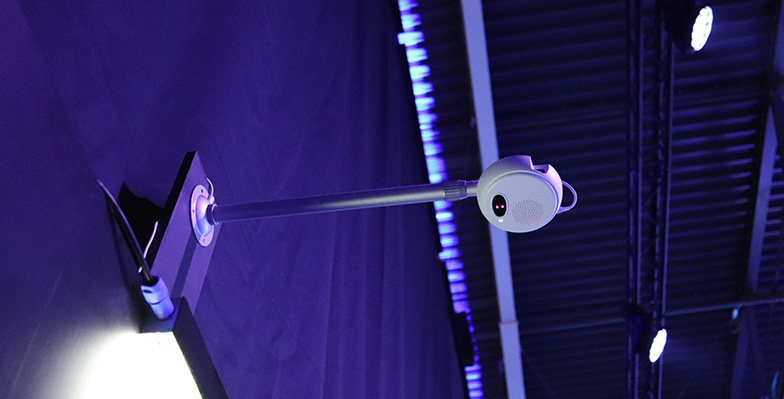
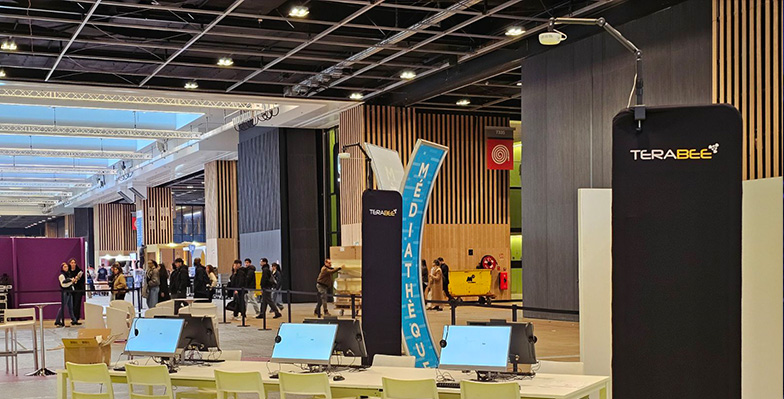
The SFR (Société Française de Rhumatologie) deployment in Paris (December 2025) demonstrated how data can rethink venue layouts. Using 30 OCCUPANCY sensors in poster areas and media libraries, the objectives shifted toward content strategy:
- Poster Areas: By tracking which topics gathered the highest number of people and measuring the effectiveness of “poster tours,” organizers could rethink topic selection and placement for maximum engagement.
- Media Libraries: Comparing occupancy levels across different configurations allowed organizers to identify which locations increased visibility.
Making it Realistic: The Rental Revolution
As tech evangelists like Dahlia El Gazzar often remind us, the industry needs to stop doing things “the old way.” The biggest barrier to adoption used to be the high CAPEX of buying sensors for a 3-day event. Terabee has solved this with a flexible rental model.
Our data shows that moving to an OPEX (Operational Expenditure) model allows organizers to deploy high-precision tech (98%+ accuracy) without the burden of maintenance or storage.
Technology Without the Privacy Headache
The future of trade shows cannot come at the cost of privacy. Our Time-of-Flight (ToF) and Thermal imaging technologies are GDPR-compliant by design. We do not use RGB cameras and we never record faces; instead, we count anonymous shapes. All data is processed via edge computing, meaning it is handled locally on the device, to ensure that no personal details ever leave the sensor.
Conclusion: Data as the New Currency
The technology to enable this shift exists today. The only remaining barrier is the business model. At Terabee, we aren’t just building sensors; we are building the metrics that will define the future of physical ROI.
Join the Discussion:
This article builds on the visionary concepts discussed in my recent newsletter. You can read the original post and join the conversation here: The Future of Trade Shows Must Be Inspired by Google Ads.
The Author: Dr. Max Ruffo is a visionary technology leader with over two decades of experience at the forefront of industrial innovation, having pioneered the introduction of 3D printing, civil drones, autonomous mobile robots and LiDAR sensors. Today, Max is dedicated to a long-term mission of building a better world by championing green buildings and net-zero communities.
Recommended References for Scientific Grounding
- On Performance-Based Rent: Benjamin, J. D., Boyle, G. W., & Sirmans, C. F. (1992). “Retail Leasing: The Determinants of Shopping Center Rents”.
- On Trade Show ROI: Kirchgeorg, M., Springer, R., & Kästner, E. (2010). “Objectives for successfully participating in trade shows”.
- On Smart Building HVAC Optimization: Amasyali, K., & El-Gohary, N. M. (2018). “A review of data-driven building energy consumption prediction studies”.
- Industry Standards: UFI (The Global Association of the Exhibition Industry) – Reports on “Digital Innovation in Exhibitions”.