In the world of smart buildings and IoT, “People Counting” is often used as a catch-all term. However, if you look under the hood, counting people isn’t a single task: it’s a spectrum.
At Terabee, we often hear the question: “Should I use the FLOW sensor or the OCCUPANCY sensor?”
While both devices ultimately tell you about human activity in a space, they do so using completely different technological “engines” and answer fundamentally different questions. Understanding this distinction is the key to building a system that is both cost-effective and accurate.
Here is a look inside the technology to help you decide which tool fits your scope.
The "Engine" Room: Tech Inside
The primary difference lies in the sensing technology. Think of it as the difference between a video camera recording a highway (flow) and a thermal camera taking a snapshot of a parking lot (occupancy). But we clearly do not use cameras!
1. Terabee FLOW: The Motion Tracker
The Engine: Time-of-Flight (ToF)
How it works: Our FLOW sensors (and the compact FLOW M) use active Time-of-Flight technology. They emit invisible infrared light and measure how long it takes to bounce back. This creates a real-time 3D depth map of the area below.
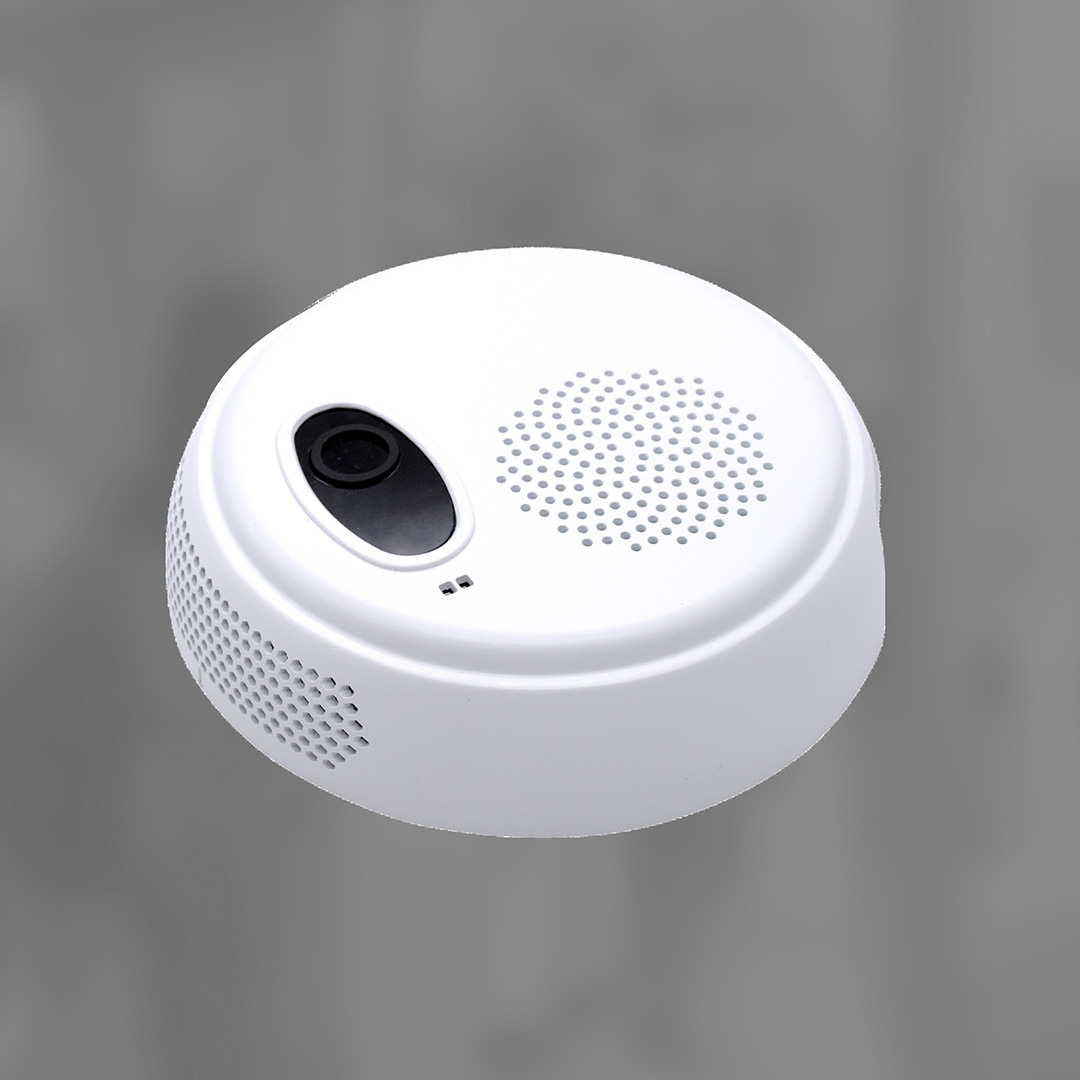
What it sees: It sees moving 3D shapes. It is exceptionally good at detecting movement and direction. It knows if a person is walking IN or OUT, even in crowded doorways.
2. Terabee OCCUPANCY: The Presence Counter
The Engine: Thermal Imaging
How it works: The OCCUPANCY sensor uses passive thermal technology. It detects the heat signatures emitted by human bodies.
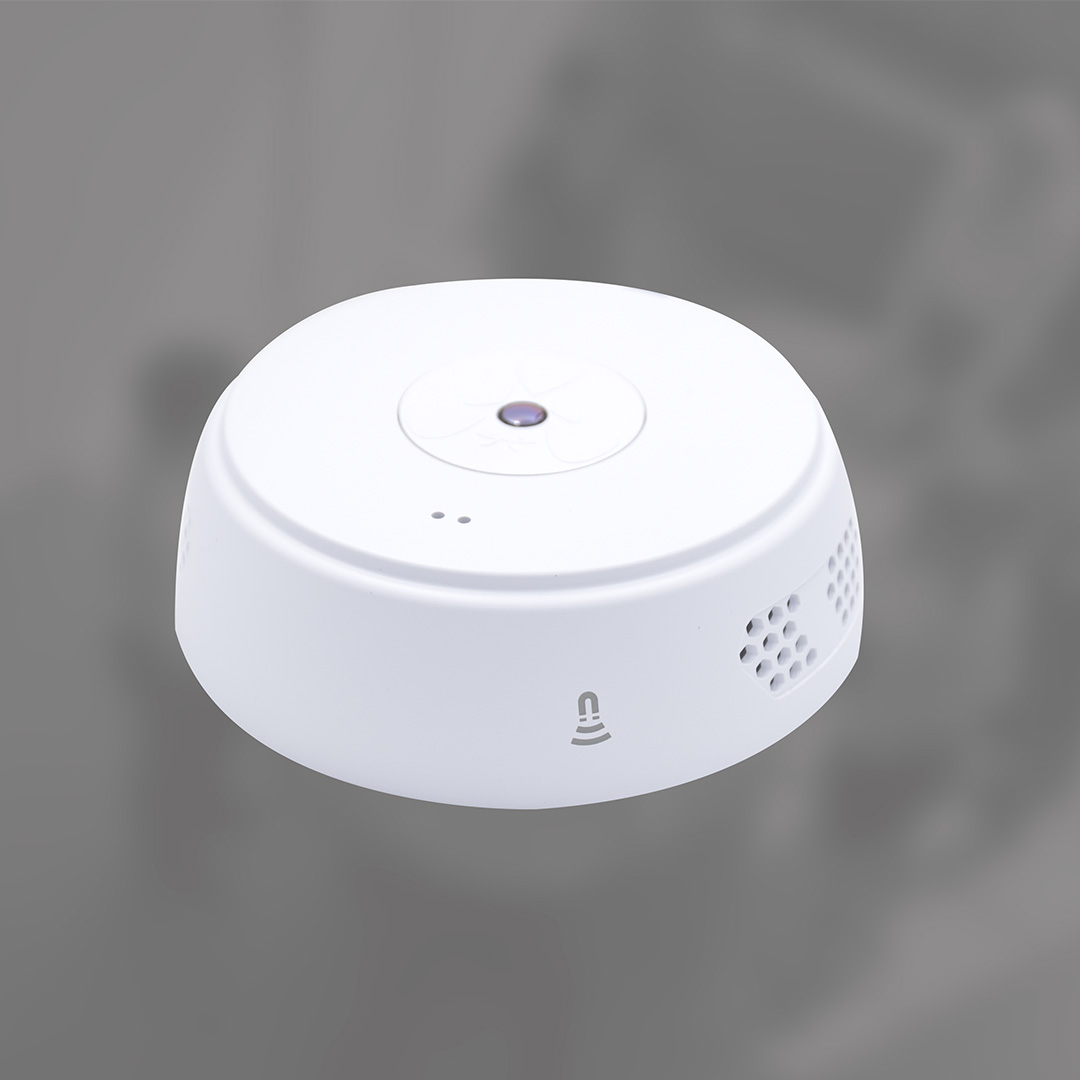
What it sees: It sees static presence. It doesn’t need people to move to detect them. Even if five people are sitting motionless in a meeting room, their heat signatures remain visible to the sensor.
The Output: Dynamic vs. Static
Because the engines are different, the data they output serves different purposes.
- FLOW answers: “How many people passed by?”
It generates dynamic data (+1 Entry, -1 Exit). It is the perfect tool for understanding traffic, peak hours, and throughput. - OCCUPANCY answers: “How many people are here right now?”
It generates static data (e.g., “5 people”). It provides an absolute truth (Ground Truth) at any given second, regardless of how long the people have been there.
The Overlap: Can FLOW Measure Occupancy?
This is where it gets interesting. Yes, FLOW can measure occupancy, but with a caveat.
By mathematically aggregating the “Ins” and “Outs” from a FLOW sensor, you can calculate the occupancy of a room (Occupancy = Total In – Total Out).
When to do this: This is the ideal strategy for large open spaces like a cafeteria, a library floor, or an entire event hall. It is far more cost-effective to install two FLOW sensors at the entrances than to cover a 500m² ceiling with multiple Occupancy sensors.
The catch: Calculated occupancy can suffer from “drift” over time (e.g., if one person tails another too closely and is missed, the error persists until the count is reset, usually on a daily basis. It requires a “zeroing” event (like the building closing at night) to remain accurate.
Decision Guide: Which Product for Which Space?

To simplify your decision, here is how we recommend deploying them based on the use case.
Use Terabee FLOW (or FLOW M) when:
- You need traffic trends: You want to know how many people visit a store, use a corridor, or enter a building per hour.
- The space is massive: You need to monitor occupancy for a whole floor or large auditorium. Measuring the boundaries (entrances/exits) is smarter than measuring the area.
- Privacy is paramount in passing: You need to count people in a hallway without using cameras (ToF is strictly depth data, no RGB).
- The passage is narrow: For single doorways or bathroom entrances, the FLOW M is a cost-effective powerhouse.
Use Terabee OCCUPANCY when:
- You need “Ground Truth”: You need to know exactly if a room is free or busy right now (e.g., for a room booking system or live signage).
- People are static: In meeting rooms, waiting areas, or study pods, people sit still. FLOW might miss someone entering if they stand in the doorway, but OCCUPANCY sees their heat signature constantly.
- The “Zero” matters: You need to automate lights or HVAC. You cannot risk the lights staying on because a calculated flow count thinks someone is inside when they aren’t. Thermal sensors verify an empty room instantly.
Better Together: The Complementary Approach

In a comprehensive Smart Building project, you rarely choose just one. They are best used as a team:
- Macro Level (FLOW): Install FLOW sensors at the main building reception and floor access points. This gives you the “big picture” of building utilization and total footfall.
- Micro Level (OCCUPANCY): Install OCCUPANCY sensors in high-value assets like boardrooms, agile meeting spaces, and specialized labs. This gives you precise, real-time availability for room booking and energy automation.
Both solutions share the Terabee DNA: they are GDPR compliant by design (no cameras/facial recognition), platform agnostic (they speak to your server, not ours), and offer >98% accuracy.
Choosing the right sensor isn’t about which technology is “better”, it’s about matching the engine to the application.
Do you have a specific floor plan in mind? Reach out to our product team to map out the ideal sensor mix.
The Author: Baptiste Potier is the Product Director at Terabee, leading the strategy and development of the product range. He holds an engineering degree from a French engineering school and a Master of Science in Embedded Systems and Robotics, providing a strong technical foundation. His background includes hands-on experience in application development, computer vision, and software engineering.
Source of information/data
People Flow Counting
- Definition: Tracks the movement of individuals through defined areas, focusing on direction and volume over time to understand how people navigate a space. Aims to count individuals passing through entrances, exits, corridors, or passages.
- Operation: Relies on technology that can detect and differentiate movement direction. Terabee’s systems utilize Time-of-Flight (ToF) sensors for accurate individual tracking and detailed flow data, including direction. Video analytics can also identify movement patterns. Terabee’s FLOW and FLOW M products exemplify flow counting solutions.
- Installation: Typically placed above or at doorways, entrances, exits, corridors, or passages. FLOW M is suitable for narrow passages (up to 0.9m), while FLOW covers entrances up to 3.4m, with the possibility to combine multiple units for wider passages (up to 15m).
- Applications: Understanding entrance usage, assessing traffic, gaining insights into traffic patterns, enabling space occupancy analytics for large areas (by aggregating data from multiple entrances), managing congestion, and potentially triggering alarms during events like evacuations.
- Terabee Technology: Employs Time-of-Flight (ToF) 3D sensing. This technology uses infrared light to create a 3D representation of movements and recognizes general shapes for accurate counting without capturing personal details. It utilizes low-resolution ToF sensors, not cameras, ensuring privacy.
People Occupancy Counting
- Definition: Focuses on detecting and counting the precise number of people present within a specific area or room at any given moment. Well-suited for semi-static situations.
- Operation: Terabee’s devices use ultra-wide thermal imaging. This technology maps temperature patterns using passive infrared to distinguish between people and objects. Accuracy depends on software that can filter out non-human heat sources. The device counts individuals by sensing thermal signatures with low-resolution images and offers multi-zone counting, monitoring up to 8 independent zones within its view.
- Installation: Typically installed centrally within the area or room being monitored.
- Applications: Determining the number of people in a room, obtaining multi-zone occupancy data for various spaces from meeting rooms to large areas, managing small spaces (meeting rooms, offices, bathrooms), and large spaces (public buildings, open-plan offices, coworking areas). The data informs better business decisions, optimizes space utilization, streamlines building operations, manages space, and optimizes spaces.
- Terabee Technology: Utilizes thermal imaging. This technology detects thermal signatures and does not use RGB cameras, ensuring GDPR compliance and privacy. It functions effectively in low-light and complete darkness.
Key Differences Summarized
- Focus: Flow counting emphasizes movement and direction through passages, while occupancy counting focuses on the number of people in an area at a specific time.
- Placement: Flow counters are generally located at entrances, exits, and corridors, whereas occupancy counters are placed centrally within a room or area.
- Technology: Terabee’s flow counting uses Time-of-Flight technology, and its occupancy counting uses thermal imaging.
- Application: Flow counting is used to understand traffic and movement patterns, while occupancy counting is used to know the current number of people in a space and manage that space accordingly.
Shared Characteristics
Both technologies offer high accuracy (over 98%), are designed to be GDPR compliant due to the technology used (no cameras), are platform agnostic (data can be sent to any server), and do not require subscription fees.
Complementary Nature
These technologies are often used together, with flow data from multiple entrances being aggregated to calculate occupancy for large spaces. Terabee provides both types of solutions.